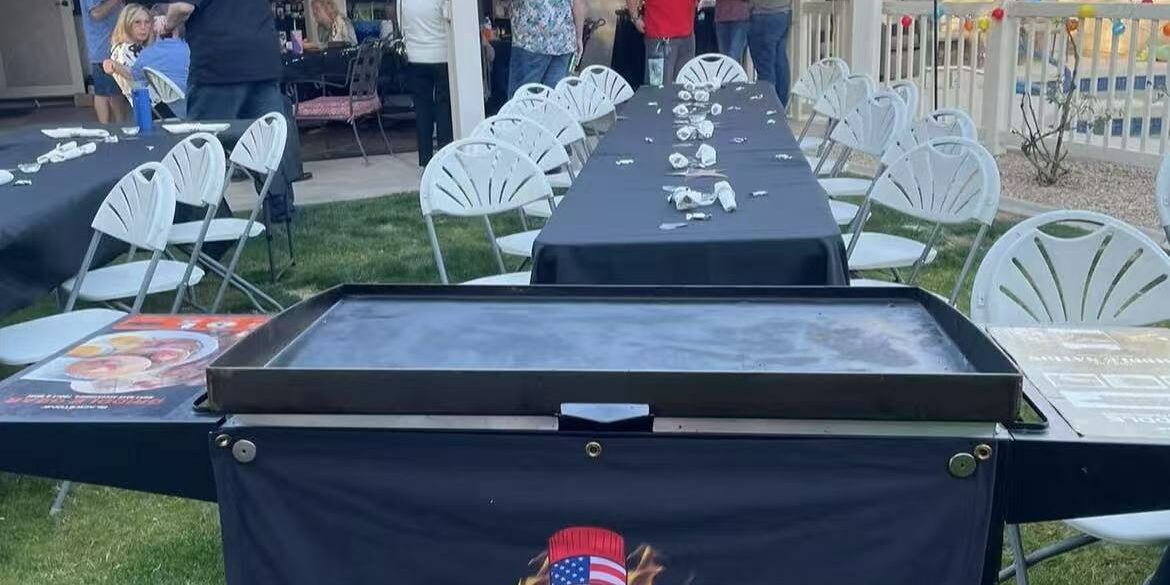
Planning hibachi at home for a small group is less about packing every chair you own around the grill and more about matching guest count to one portable teppanyaki station. In a US backyard or patio, the right headcount keeps everyone in the show, keeps plates hot, and keeps the evening feeling like a private dinner—not a crowded buffet line.
Whether you are hosting in New York, New Jersey, Florida, Texas, or another metro we serve, the same practical ranges apply: intimate dinners of four to six, a sweet spot of about eight to twelve for one station, and a clear cue for when a second grill (or a second seating) is the better call.
How many guests fit one portable hibachi station
One mobile hibachi grill is built for a tight viewing arc. Guests need a clear line to the chef, space for drinks and plates, and a path for the cook to work safely. Think in three bands rather than a single “max capacity” number.
- Intimate 4–6: Ideal for date-night couples plus close friends, a small family celebration, or a quiet anniversary dinner. Everyone sits close, conversation stays easy, and the chef can customize proteins without juggling a long ticket.
- Sweet spot 8–12: The most common at-home private chef setup. You still get the full interactive show—onion volcanoes, fried rice on the steel, plated courses—while keeping wait times short and sightlines honest.
- Stretch 13–16 on one station: Possible only with careful seating (two shallow rows or a U-shape) and hosts who accept that outer seats see less of the performance. Beyond that, food pacing and visibility usually suffer.
If your invite list is climbing past the mid-teens, ask about splitting into two stations or two timed seatings. Two smaller audiences almost always feel more “private chef” than one oversized ring of chairs.
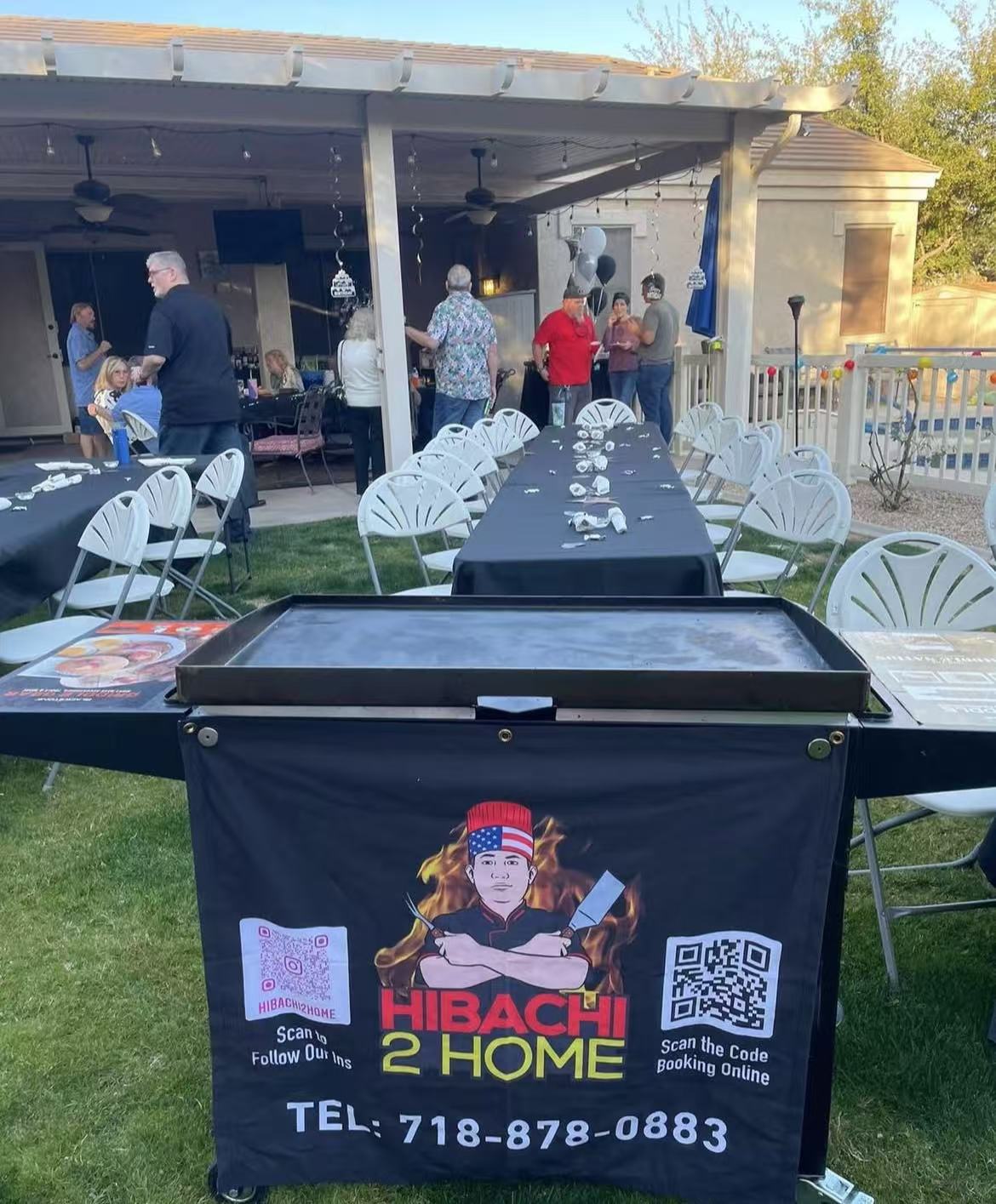
Sightlines, protein portions, and pacing for small groups
Guest count is only half the plan. How people sit and what they order decides whether the evening feels smooth.
Sightlines. Place the portable grill so the long side faces the main seating, not a wall or fence. Keep a clear buffer for the chef’s tools and propane. Avoid stacking guests behind one another unless the back row is standing cocktail-style for a few minutes of the show. Kids do better on the ends of the front row where they can see without crowding the steel.
Protein portions. For small groups, confirm adult vs. child plates when you book. A typical private at-home hibachi meal includes a mix of proteins (chicken, steak, shrimp, or salmon) plus fried rice and vegetables. With four to six guests you can lean into premium upgrades without waste; with eight to twelve, a shared “house mix” plus one or two upgrades keeps the grill flowing. Tell the chef about vegetarian guests early so a dedicated zone of the steel stays clean.
Pacing. Smaller groups finish courses faster. That is a feature: more time for photos, toasts, and dessert. Larger single-station groups need staggered plating so the first seats are not cooling while the last seats are still cooking. Your chef will usually cook in waves—veggies and rice, then proteins—so a realistic dinner window for one station is often around ninety minutes of active cooking plus setup and pack-out.
Patio vs. indoor dining also matters. Covered patios and open garages work well for eight to twelve. Tight dining rooms may force a lower guest count even if you “have enough chairs,” because the grill needs clearance and ventilation.
What to confirm when you book for your guest count
When you reach out to book hibachi at home, lead with the number of diners and the space type. A short, clear brief helps the team match you with the right setup:
- Final (or close) headcount — adults, kids under a certain age, and anyone not eating a full plate.
- Space photo or dimensions — backyard patio, driveway, rooftop, or indoor kitchen-adjacent area; note power/outlet access if relevant and any HOA or building rules.
- Seating plan — chairs only, high-tops, or mixed; whether you want a single U around one grill or two clusters.
- Menu preferences and allergies — so protein mixes and sauces are planned before the chef arrives.
- Timing — desired start of the show, not just “dinner at 6,” so setup can finish before guests gather.
If your group might grow after the invite goes out, say so up front. It is easier to reserve the option of a second station than to squeeze sixteen people into a layout designed for ten.
Hibachi 2Home brings a private chef grill experience to backyards and patios across multiple US cities. For a small-group dinner that still feels like a full teppanyaki show, start with your guest count and space, then book online or call 718-878-0883. We will help you decide whether one portable station is enough—or when a split setup will make the night better for everyone.