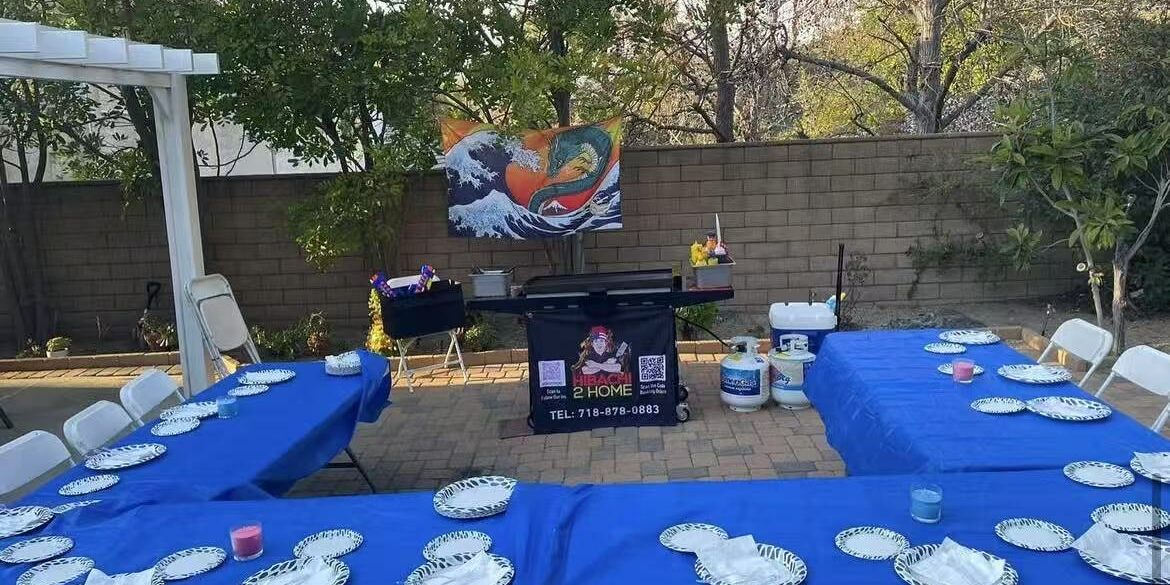
Planning Denver backyard hibachi at home turns a Front Range patio night into a private teppanyaki show without fighting downtown restaurant waitlists. A mobile chef brings the steel grill, fresh ingredients, and entertainment to your backyard, covered patio, or rooftop deck—so guests stay close, plates stay hot, and the evening feels like a custom dinner instead of a rushed reservation.
Whether you are hosting in Denver, Boulder, Aurora, Lakewood, Littleton, Highlands Ranch, or elsewhere across the Front Range markets we serve, the formula is simple: you set tables, chairs, plates, and utensils; we bring the hibachi grill and an experienced chef who cooks in front of your guests. Below is a practical guide to what Denver hosts can expect, how to stage a patio-friendly cook line, and how to book with confidence.
Why Denver patios are built for private hibachi
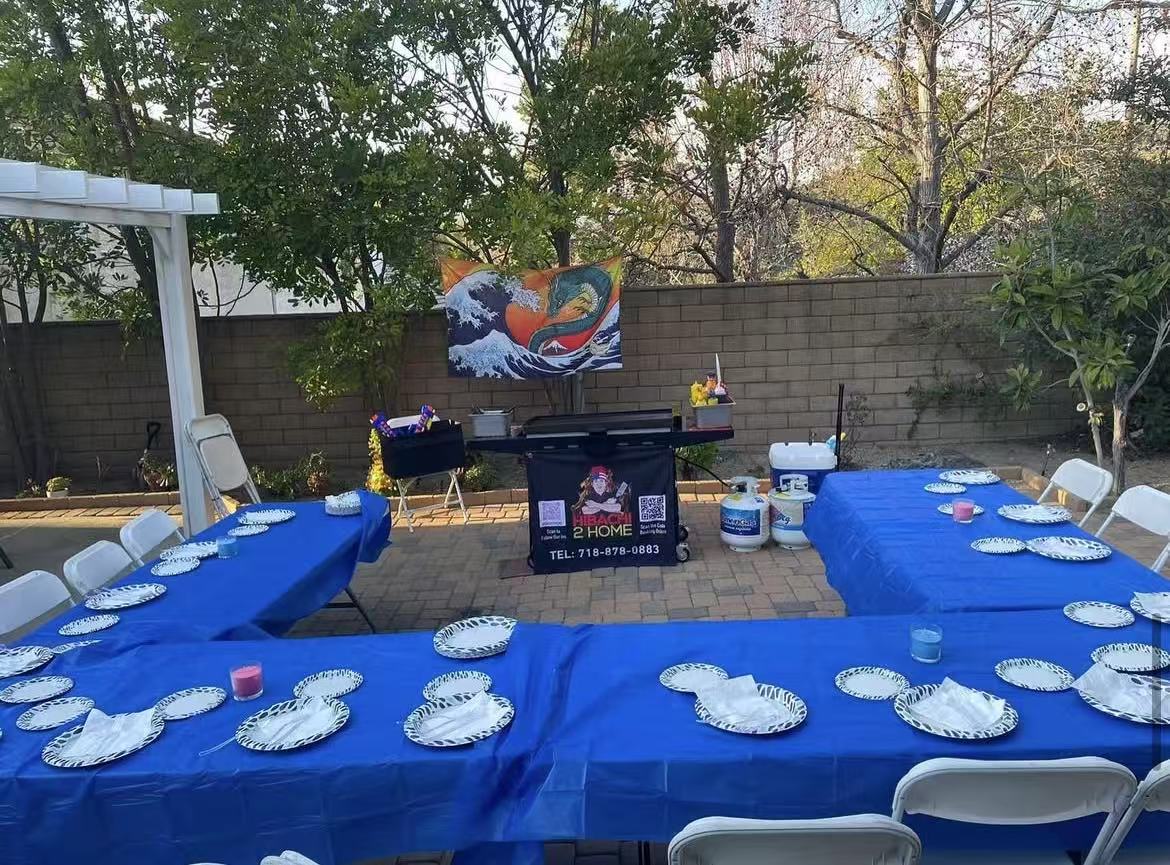
Denver’s outdoor lifestyle is a natural fit for at-home hibachi. Mild late-spring through early-fall evenings, covered patios, and mountain-view decks give the chef a clear work zone while guests enjoy a comfortable viewing arc. Compared with a crowded steakhouse teppanyaki table, a private patio keeps conversation easy and lets kids, grandparents, and friends share the same show without waiting for a large party booth.
A portable hibachi station needs a flat, heat-safe surface, room for the chef to move, and seating in a U or shallow arc so everyone can see the grill. Many Front Range homes already have that layout: a rectangular patio table under a pergola, string lights, and a small buffer from the firepit or fence line. If your space is a Highlands condo balcony or an HOA-restricted patio, mention clearance and ventilation when you inquire—those details matter as much as chair count.
Seasonally, May through October is peak patio season along the Front Range, but cooler nights still work with heaters, blankets, and an earlier start. Keep the steel grill the center of attention, keep guests within easy sightlines, and keep pathways open so the chef can plate without weaving through a crowd.
What guests get at a Denver backyard hibachi dinner
An at-home hibachi meal is interactive by design. Guests watch proteins sear on the flat-top, customize spice level and doneness, and eat while the show is still happening a few feet away. A typical private chef experience starts with a side salad, then hibachi vegetables, fried rice, and two protein choices per guest—chicken, steak, shrimp, scallops, salmon, or vegetarian options, with upgrades such as filet mignon or lobster tail available when you book.
Portion pacing fits backyard hospitality. Smaller groups finish courses faster and have more time for photos and toasts; mid-size groups (often around eight to twelve around one station) still get a full show without long waits. Kids under twelve usually have a reduced rate, and you can flag picky eaters or allergies in advance so sauces and cook zones stay clean.
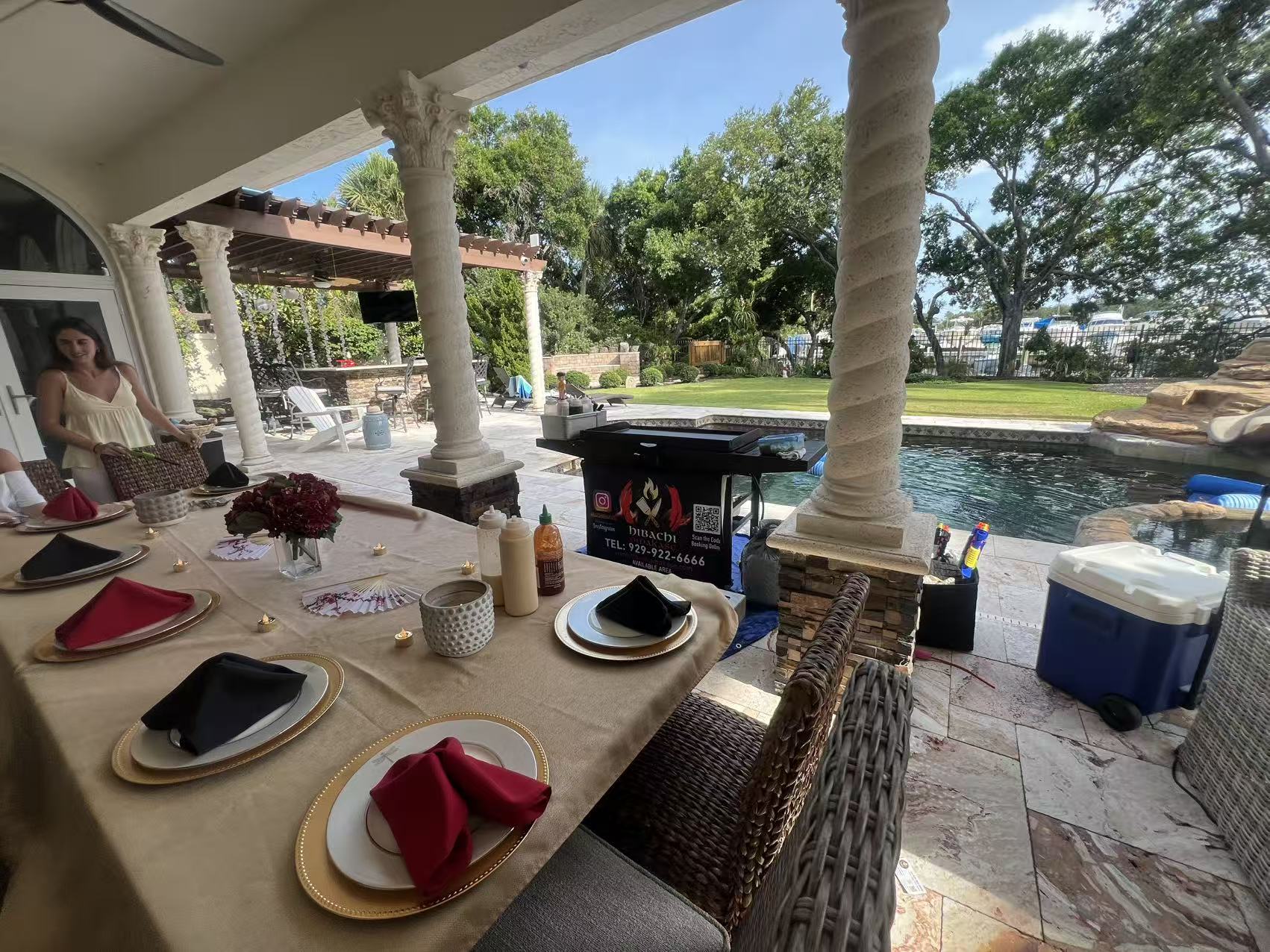
Entertainment is part of the package: the onion volcano, egg tricks, and plated fried rice are why people choose hibachi at home over takeout. Hosts provide the tablescape; the chef provides the performance and the food. Ask about fresh sushi platters if you want a cold starter before the grill fires up.
Patio setup tips before your chef arrives
A smooth Denver backyard hibachi night starts with a short host checklist. You do not need restaurant equipment—just a clear stage and guest logistics.
- Tables and chairs: Set seating in a U or shallow arc facing the long side of the grill. Leave a buffer for tools, propane, and plating.
- Plates and utensils: Have enough place settings for every diner, plus a small stack for seconds if you expect hearty appetites.
- Space photo: Send a patio or deck photo when you book so the team can confirm one station is enough—or advise a second seating for larger lists.
- Weather and altitude plan: Covered patio or pergola helps on bright days and sudden Front Range storms; have a quick indoor or covered backup so chairs can move if weather shifts.
- Timing: Share your preferred show start time, not only “dinner at 6,” so setup finishes before guests gather with drinks—especially valuable when you want golden-hour photos with the foothills light.
Evening lighting matters: soft string lights or a well-lit patio keep the grill visible for photos without harsh floodlights in the chef’s eyes. Keep pets and play zones away from the cook line. If you are celebrating a birthday, graduation, Broncos watch party, or neighborhood get-together, tell the chef the occasion—small touches (who gets the first plate, a quick toast window) make the show feel personal.
How to book Denver backyard hibachi at home
Booking Denver backyard hibachi is straightforward when you lead with the essentials. Share your approximate guest count (adults and kids), patio or backyard type, preferred date and start time, protein preferences, and any allergies. Pricing on hibachi2home.com is listed per person with a party minimum that may vary by location—confirm the quote for your address so travel and setup are clear before you lock the date.
Popular Denver-area occasions include birthday dinners, retirement parties, family reunions, and low-key Friday patio nights when you want restaurant energy without the drive across town. If your invite list might grow after RSVPs come in, say so early; it is easier to plan for a second station or a staggered seating than to squeeze too many chairs around one grill.
Hibachi 2Home brings a private chef and portable grill to backyards and patios across multiple US cities, including Colorado’s Front Range. For Denver hosts who want a full teppanyaki show at home, start with your headcount and a patio photo, then book online or call 718-878-0883. We will help you match the menu, timing, and setup so your backyard feels like the best seat in the house.